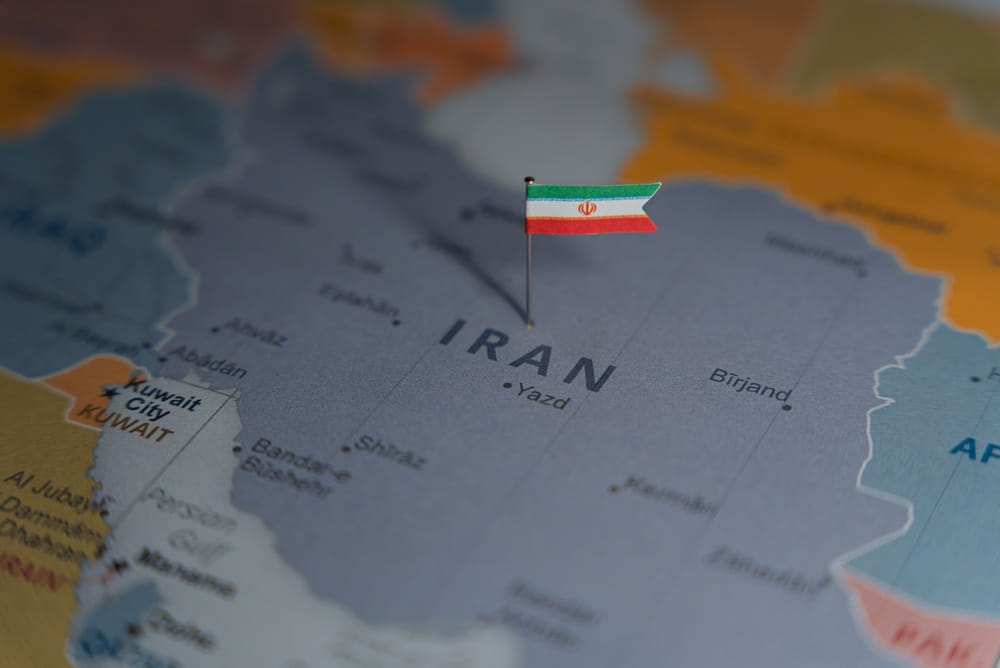
Increasing oil prices and inflation uncertainty have many investors nervous about what the Iran conflict could mean for their portfolios.
In this article, CERTIFIED FINANCIAL PLANNER® certificant Allison Donaldson explains how markets typically react to geopolitical conflict and offers reassurance for nervous investors.
Jump To:
- How Markets Historically React to Geopolitical Uncertainty
- How HTG Advisors is Monitoring the Iranian Conflict
- How We’re Approaching Investment Strategy During The Iranian Conflict
How Markets Historically React to Geopolitical Uncertainty
History tells a consistent story about the impact of geopolitical conflict on investor portfolios: markets are resilient. Though conflicts might cause short-term market downturns, disciplined investors who stay the course have typically been rewarded.
Historically, geopolitical conflicts cause an average S&P 500 decline of 5-6% from onset to trough, with markets typically recovering within months. For most long-term investors, the best approach is to ride out the storm and wait for markets to recover.
However, conflicts involving oil shocks (like the 1973 Arab oil embargo) have caused greater declines with longer recovery. Given this conflict’s oil dimensions, investors should be prepared for a wider range of outcomes.
Graph of Long-Term Impact of Geopolitical Events on Investor Portfolios
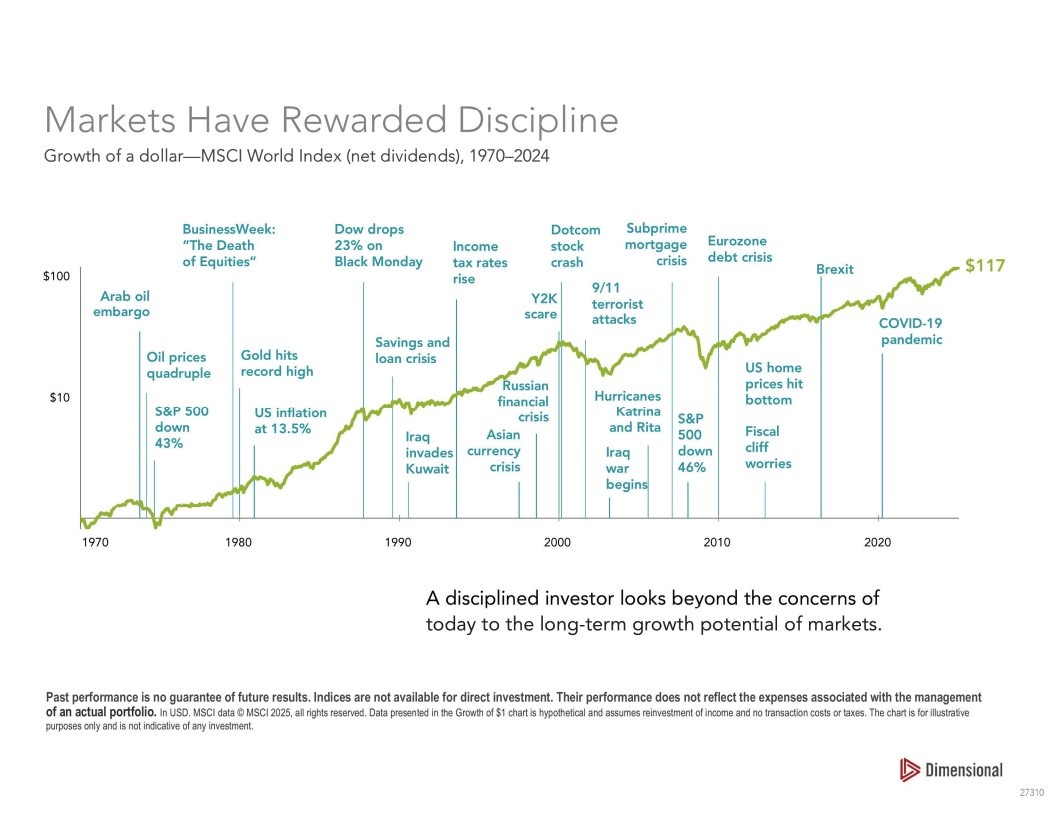 Source: Dimensional
How HTG Advisors is Monitoring the Iranian Conflict
We have been consulting with a range of investment, military, and geopolitical experts and will continue to closely monitor developments and any potential impact on your portfolio.
What We Know So Far:
- While initial consensus was that the active military situation would likely resolve quickly, the situation is active and evolving, and no clear resolution timeline has emerged. Longer-term regional and economic consequences remain uncertain.
- Iran needs oil exports to survive economically; many countries rely on oil out of the Persian Gulf. This two-way economic dependency creates pressure for compromise.
- Since the conflict began, markets have swung sharply in both directions – some days up, some days down – as new information emerges daily. This is markets functioning normally, processing uncertainty in real time. Don’t confuse short-term noise for long-term signal.
- Oil prices are expected to remain high for an extended period. The U.S. is currently a net exporter of petroleum. This reduces, but does not eliminate, American exposure to oil price shocks, since U.S. consumers still pay global market prices at the pump.
- Inflation is expected to move higher as the impact of elevated energy prices flows through to March data, but if the conflict resolves quickly, it will be manageable.
- Defense spending has already risen significantly in fiscal year 2026, a trend that predates this conflict. Defense-related sectors may see continued demand and could partially offset a market slowdown.
- The financial pain is felt most acutely by low-income families, who spend a higher proportion of their income on energy, and by those navigating an already weak job market.
How We’re Approaching Investment Strategy During The Iranian Conflict
We don’t know how long this will last or how severe the impact will be. What history does tell us is that investors who stay disciplined through uncertainty tend to fare better than those who react to headlines.
Our investment approach remains centered on helping you achieve your long-term goals while maintaining sufficient safe, liquid assets to weather short-term turbulence.
Reassess your risk capacity.
Has your risk tolerance or needs genuinely changed? Your allocation between stocks, bonds, and cash should reflect your time horizon and risk tolerance. If a 10% portfolio drop would cause you to lose sleep or sell, your allocation may be too aggressive regardless of geopolitics.
Keep your portfolio diversified across both geography & industry.
Not all regions and sectors are equally impacted by geopolitical events, which is why diversification is one of the most powerful tools available to long-term investors. Ensure you’re invested across U.S. and international markets to mitigate risk. The goal isn’t to predict which markets or sectors will be hit hardest; it’s to build a portfolio resilient enough that you don’t need to predict. Diversification won’t eliminate losses in a downturn, but it has historically reduced volatility and improved long-term risk-adjusted returns.
Don’t make rash decisions.
Political uncertainty can feel scary for investors, but reacting to short-term volatility often does more harm than good. Diversified portfolios can weather moments of uncertainty, and bear markets happen every 4.8 years on average – even without geopolitical conflict.
Rebalance if you’ve drifted. Volatility often shifts your portfolio away from your target allocation. Rebalancing back to your targets is a disciplined, evidence-based response – and more productive than trying to time the market.
You can’t control oil prices, geopolitical outcomes, or short-term market movements. You can control your allocation, diversification, costs, and behavior. Those are the levers worth focusing on.
If you’re concerned about how current events could impact your investment strategy or want to reevaluate your asset allocation, we’re here to help. We specialize in helping individuals and families navigate moments of transition and uncertainty. Schedule a free consultation here.